
Fifteen years in one building
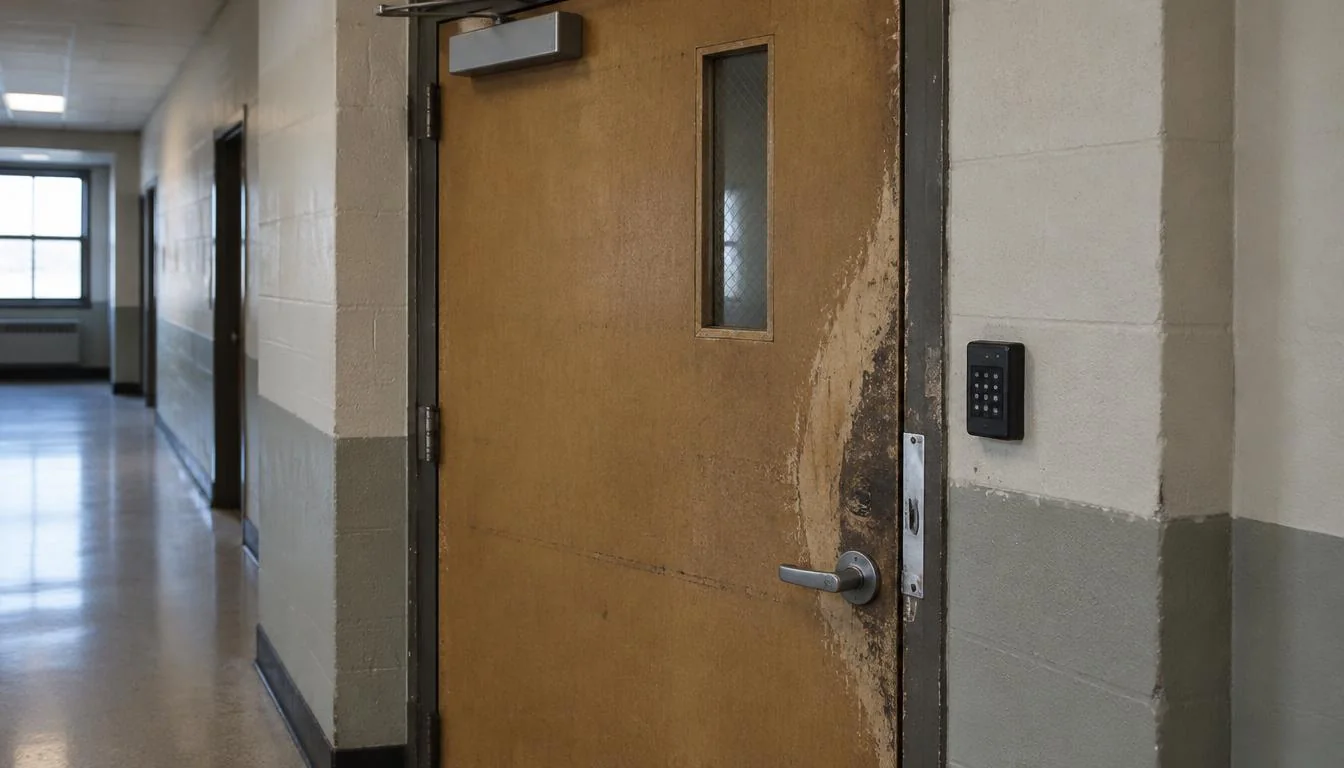
A door. Then, a few years later, a second door on the other side of the same corridor. Then the hardware on the first door, which had been perfectly serviceable right up until the morning it wasn't. Then a camera at the back entrance, because the back entrance is where deliveries arrive and where people arrive, and those are different kinds of arrival. Then, later, the hardware on the second door.
That's not a project. That's fifteen years at one address, and it's a kind of work almost nobody writes about.
What a long relationship with one building actually buys
The first thing it buys is memory, and memory is cheaper than discovery.
We know where the conduit runs in that building because we were there when it went in. We know which wall is block and which is plaster over lath, which matters a great deal when somebody asks on a Tuesday whether a device can go in a particular spot. We know that one corridor is longer than it looks and that one door sits in an opening that isn't square.
A new contractor walking in has to buy all of that information back, and they buy it with billable hours. A building that keeps the same people doesn't pay that bill twice.
The cheap fix usually comes first, and that is correct
In a building funded by a parish, the order of operations is not the order an installer would pick in a vacuum, and an installer who can't live with that shouldn't take the work.
There's nearly always a version that costs less and a version that is better. The less expensive one addresses the thing that is actually broken right now. The better one addresses the thing that will be broken in three years and makes the next five jobs easier. Both are legitimate. On a good day you get the second one. Most days you get the first, and then you make a note about the second so that when the money appears, nobody has to rediscover the problem.
The error installers make here is pushing the better version so hard that the organization delays doing anything at all. A door that gets fixed this month at the modest price beats a door that stays broken for a year while everyone waits for the proper solution.
"It still works" and "it would be useful" are different sentences
This is the distinction that matters most in a building like this one, and it's worth separating carefully.
A door that latches when it closes still works. That's the first sentence, and if that's where a door is, it does not need money spent on it.
A door that can tell somebody it didn't latch — that's the second sentence. That's useful. So is a door whose credentials can be changed from an office instead of by collecting keys from eleven volunteers, nine of whom are reachable and two of whom are not. So is a camera whose footage is still retrievable two weeks later rather than two days later.
None of that is required for the building to operate. All of it makes the building easier to run with a small staff and a rotating roster of volunteers. Knowing which sentence a given piece of hardware is in tells you whether this is the year to spend on it, and it's the question we get asked most often in that building.
What the building is actually for
St. Patrick's in Smithtown runs Parish Outreach, and most people in town know it as the food pantry.
It is the food pantry. It's also job outreach, and Share-a-Meal, and help for a family staring down an eviction or a utility shut-off. Ministers who go to the homebound and to the nursing home. A bereavement group. People who will make the phone call to a utility company on behalf of somebody who can't make it themselves, which is a small thing that turns out not to be small at all.
Our projects for the parish have mostly been on that side of the building — the doors into it, the hardware on those doors, and the surveillance equipment around them. Our family attended St. Patrick's school and services for many years.
Why the small jobs are the ones worth having
The industry's attention goes to the large installation. Whole-house, ground-up, every room at once. Those are satisfying and they photograph well.
But a building you've worked on for fifteen years teaches you something a single large install never will, which is how equipment ages in a real place with real traffic through it. You find out which hardware survives a corridor that sees two hundred people a week and which hardware was only ever tested in a showroom. You find out that the most common failure is not a device dying but a device nobody was shown how to use. You learn those things by going back, and you only go back if somebody keeps calling you.
A door at a time, over fifteen years, is a slower education than a big job. It's also a better one.
FAQ
FAQs
Yes. We've done projects for the Church of St. Patrick in Smithtown for over fifteen years, mostly on the Parish Outreach side of the building, along with work for other nonprofit and institutional organizations on Long Island.
The physical side: keypads, locks, strikes, gates and door stations, plus the wiring and mounting they need. On a long-running building that often means replacing hardware on a door we originally worked on years earlier.
Usually, for an unglamorous reason. A contractor who already knows where the conduit runs and what the walls are made of doesn't have to bill for finding out, and that discovery cost gets paid again every time a building changes companies.
By separating hardware that still works from hardware that would be genuinely useful if it did more. The first category doesn't need money this year. The second one makes a building easier to run, which is a real benefit but a different question.
See the work
For doors, gates and entry hardware, see Access Control & Entry. For facility work, see Commercial. The organizations we work with are listed on Community.
Talk through the problem
Call 631-656-9180, Mon–Fri 8 AM–6 PM and Sat 9 AM–1 PM, or tell us what is happening through the contact form. We serve Long Island, Manhattan and the Hamptons.